

Notebooks
The True Hero of the Analog Year

I haven’t always thought of myself as a writer. I have always been an artist. Since I was a kid, that has been integral to the way I see and understand myself. I remember getting my first art set from my great aunt for Christmas one year, maybe when I was five or six. I have a vivid memory of opening up the black plastic container with an inset section to hold each marker, crayon, and watercolor while my great aunt said to my mom, “She’s going to be an artist. You can tell.” Maybe that prophecy set me in motion to stick with visual art. A similar phrase was uttered years later by my junior high school art teacher. I wasn’t an artistic visionary, I think they could just tell I was curious.
I’ve stayed curious, I guess, which has guided me through a great many artistic passions: drawing, watercolor, bookbinding, printmaking, and now writing. I’ve never kept journals until recently. The idea that the adults in my life could discover my innermost thoughts mortified me, so I decided “why bother?” I also only knew journals to be for “Dear diary, today _____ happened” writing which I have never cared for much. Since the beginning of this year, however, I have decided to keep a couple of notebooks that I take just about everywhere with me. They have become like security blankets and I find myself itching to crack them open whenever I have a spare moment throughout my days.
Thinking > Consuming
Keeping notebooks began as a distraction from my phone. Spending time in notebooks is a way to spend less time on my phone and engage my creativity: two goals of mine for this year. Last year, scrolling became an impulse when I felt uncomfortable or bored. Thinking about the hours spent on my phone adding up was distressing. Notebooks seemed like a simple and reasonable solution. If you’ve read the other pieces in this analog project series, you already know that this is why I started the project in the first place.
Earlier this year, I made a list of reasons to keep a notebook. Personally, I am keeping notebooks in order to:
record creative inspiration and ideas in the moment before I lose them.
keep memories and memorabilia from my daily life to look back at later.
practice mindfulness and keep my mind grounded and present in the moment, especially when my mental health begins to spiral.
have mental clarity by working out thoughts, especially when I feel overwhelmed and foggy-headed.
record ideas for essays, articles, or future projects.
fill time when I’m bored, rather than scrolling on my phone.
The Perfect Notebook
Beware of there is a trap of consumerism inherent in keeping notebooks. Think of the joy and possibility of a new, blank notebook. I’ve spent too much time spent figuratively drooling over Japanese paper and perusing stationery stores online when a perfectly good, mostly blank notebook is sitting on my shelf. Some say finding your perfect notebook (perhaps a $47 Hobonichi?) is the only way you’ll stick with it. I have found that, while good paper quality is definitely a bonus, keeping a $1.49 memo pad as a pocket notebook has worked out perfectly for me. There’s nothing wrong, of course, with investing in your perfect notebook if that’s what you want to do, but I want to emphasize that you don’t need a perfect notebook, you just need a notebook.
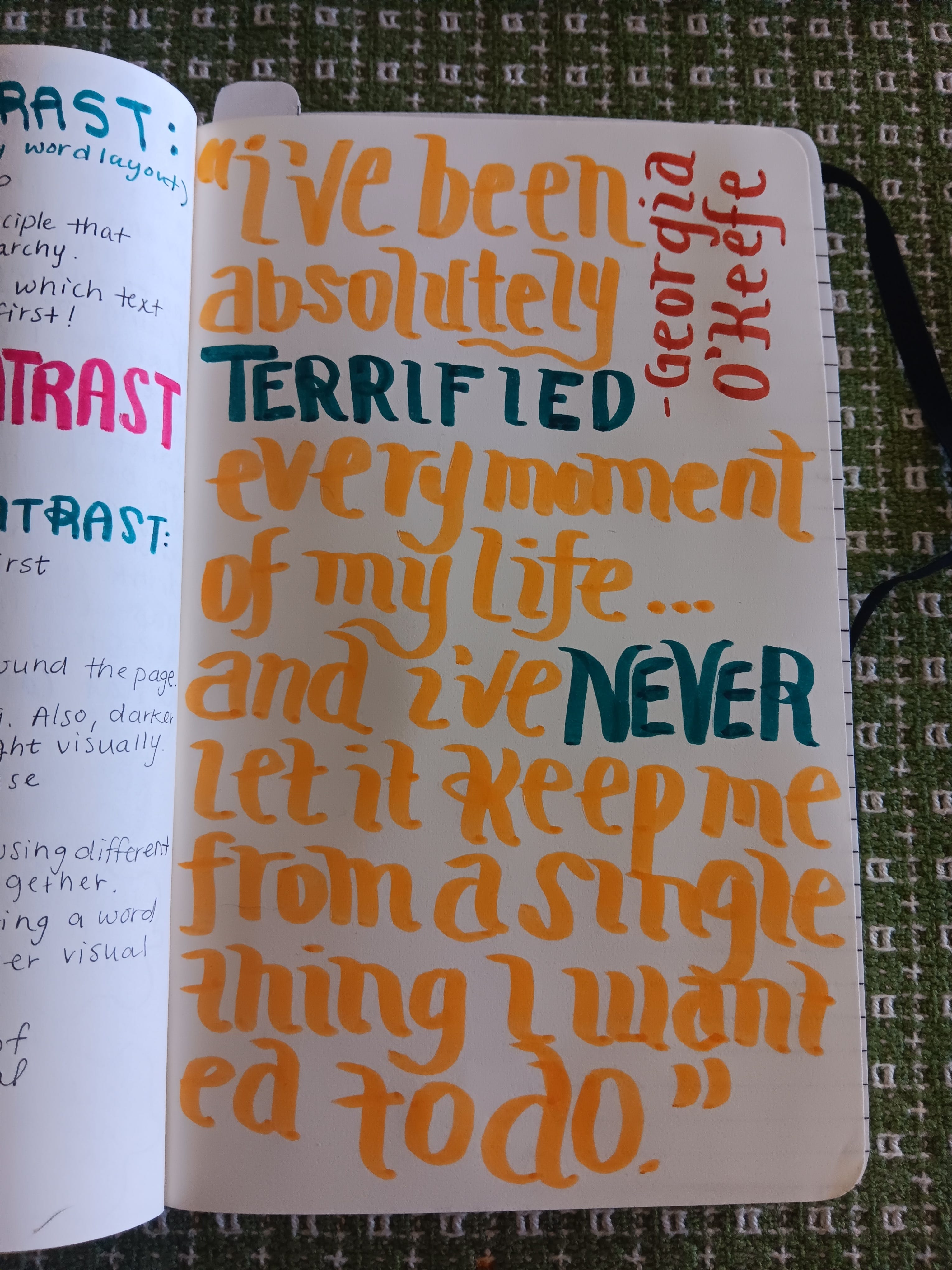
In fact, my cheap notebooks give me more creative freedom than my nice ones. I’m not afraid to “tarnish” the paper of a cheap notebook like I am with the pristine Tomoe river paper notebooks, so I actually use the pages. I feel free to add watercolor to the pages even if they crinkle, because after all it was only a dollar fifty in the first place. There are plenty of covers, charms, and accessories with which to customize your notebook, but those can also be a distraction from the actual work of notebook keeping, so be aware of the consumerist trap.
Ways to Keep a Notebook
My primary tip on keeping notebooks: Keep a pocket notebook for capturing things in the moment and a larger notebook for documenting long term or working through thoughts and ideas.
Types of Notebooks:
Journal — a place for recording your days, thoughts, and feelings. It could be writing only, a junk journal where you collect scraps of ephemera from daily life, or anything in between.
Visual Journal — or a sketchbook. I keep one of these to keep memories that feel important and to practice drawing and creativity in general.
Commonplace — I think of commonplace books as a learning tool. There are many different “definitions” of a commonplace book, but it can be whatever you need it to be. Historically, these were books where people copied down information they wanted to keep to refer back to later. It’s like the collection of screenshots on your phone, but a version you may actually remember to look back on because you took the time to transcribe the information.
Creative Writing — Maybe you want to keep a notebook for poems, story ideas, or working through creative writing ideas.
Media Journal — Keep track of books you read, movies and shows you watch, and music you listen to with a media journal. This helps me slow down and process what I enjoyed or didn’t enjoy about the media I consume: a tiny way to be your own algorithm.
Travel Journal — If you travel a lot, you may want to have a specific place where you keep travel experiences and memories. In college, I went to Paris for an art history class, and one of the assignments related to the class was to keep a journal and put together a visual version of that journal to remember the trip. I will cherish that journal forever.
This list is not exhaustive, there are endless ways to keep a notebook. There are truly no rules. You just need to find any old notebook and pen and get to work.
My Notebooks
My current notebook situation is so good that I find myself choosing it over watching a movie or looking at my phone. It consists of these:


^ My cheap and simple pocket memo book. This is inside of a leather cover I made myself, along with my wallet, and I take it with me any time I leave my house. It’s a catch-all for ideas, to-do’s, shopping lists, and more.


^ I also keep an “everything” notebook. This is a 400-page blank notebook that is oddly comforting to carry around and which I have become somewhat emotionally dependent. Its pages are being filled quickly.
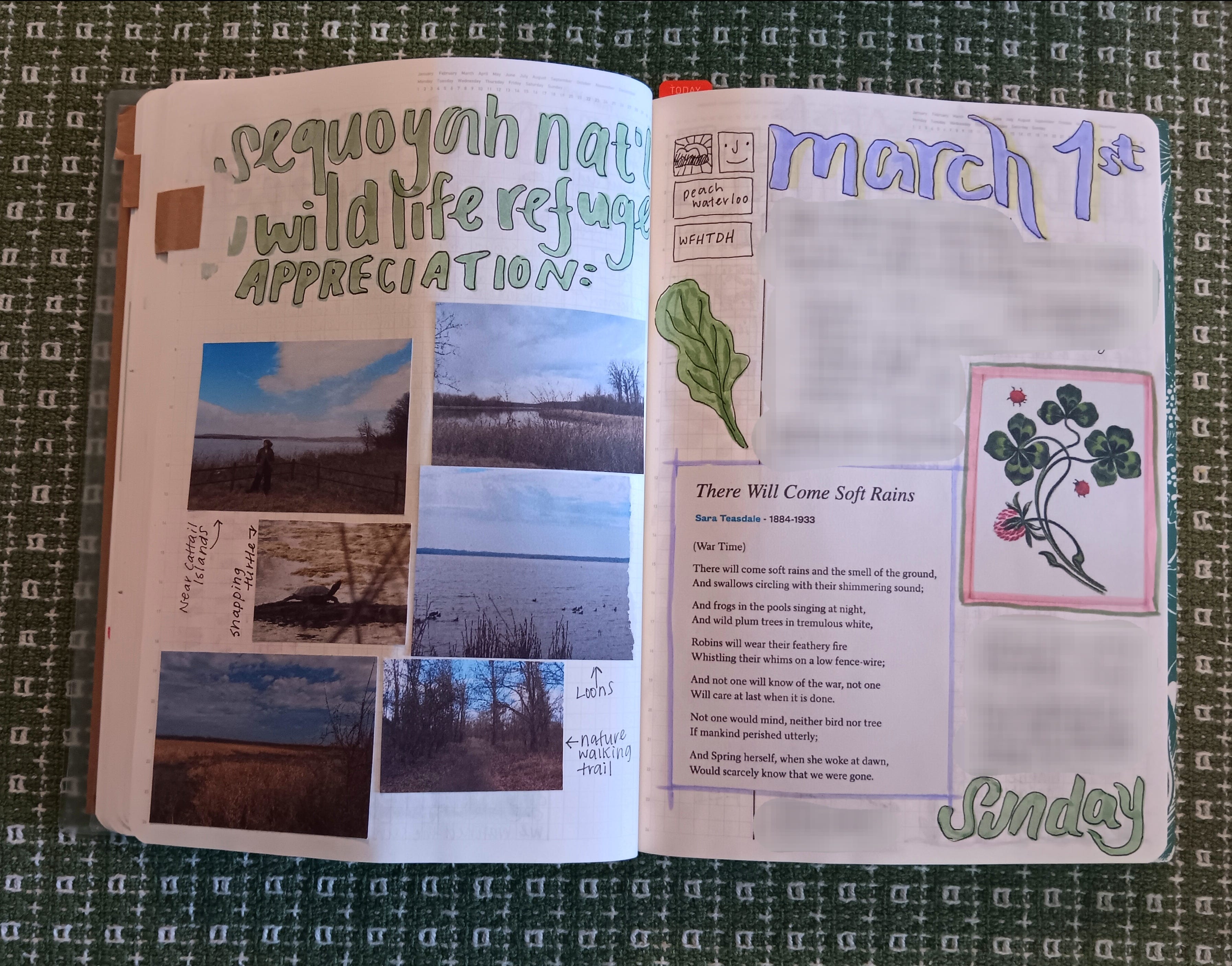
^ My visual journal has brought me lots of comfort too, and serves as a way to mark parts of my days, even the mundane ones, with experiences that are meaningful to me. Filling it is another way I spend time creatively.


^ Last is my commonplace book. This book serves as a catalog of information about subjects I am interested in, media I enjoy, and quotes I want to hold onto. I don’t think this book being separate from my everything journal is really necessary, but I do enjoy looking back on what has been informing my creativity as time passes.
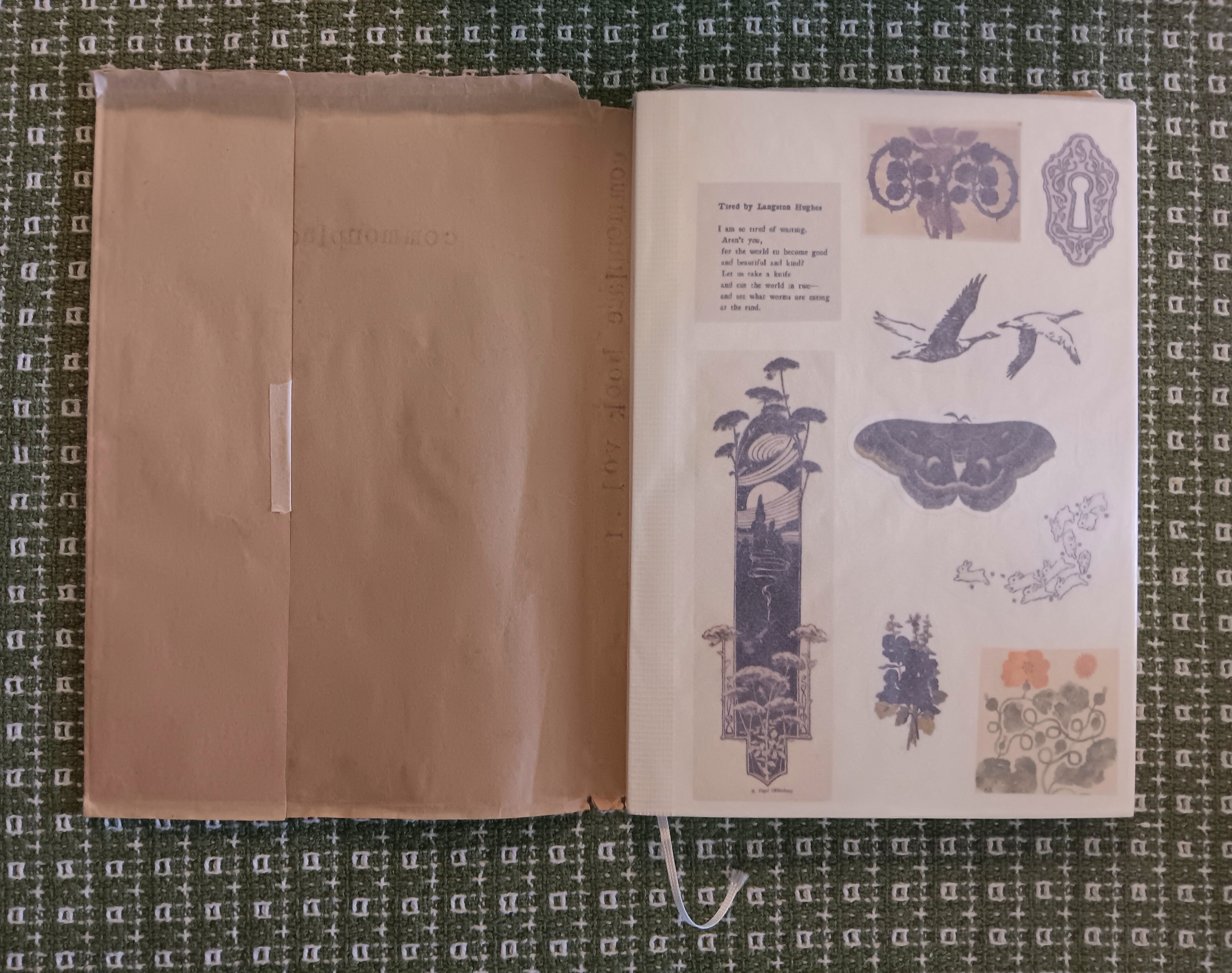
Some details have made my notebook keeping more interesting. I learned how to make my own stickers with my inkjet printer, I started using my “good” art supplies more often in my notebooks, and making my own covers has helped too. There are so very many expensive ways to decorate your notebooks, but I encourage you to seek out ephemera and objects from daily life that are free or handmade. Having a simple paper handmade cover and my little leather travel cover has made a precious bond between my notebooks and I. (Not to be too dramatic, I have always been especially susceptible to bonding with inanimate objects— I blame it on my being an only child.)
Your brain heals when your write.
Writing out your thoughts on paper helps your brain learn to “talk” to itself. The act of writing by hand is just slow enough that it quiets your amygdala: the part of your brain that processes emotions, particularly anxiety, fear, and aggression. Slowing down gives your brain the opportunity to process unfinished business, so simply writing in a stream-of-consciousness style is enough to give your brain some much needed processing time. You don’t need to figure anything out, you just need to write and let your brain do what it needs to do.
Notebooks are the true hero of an analog-focused year.
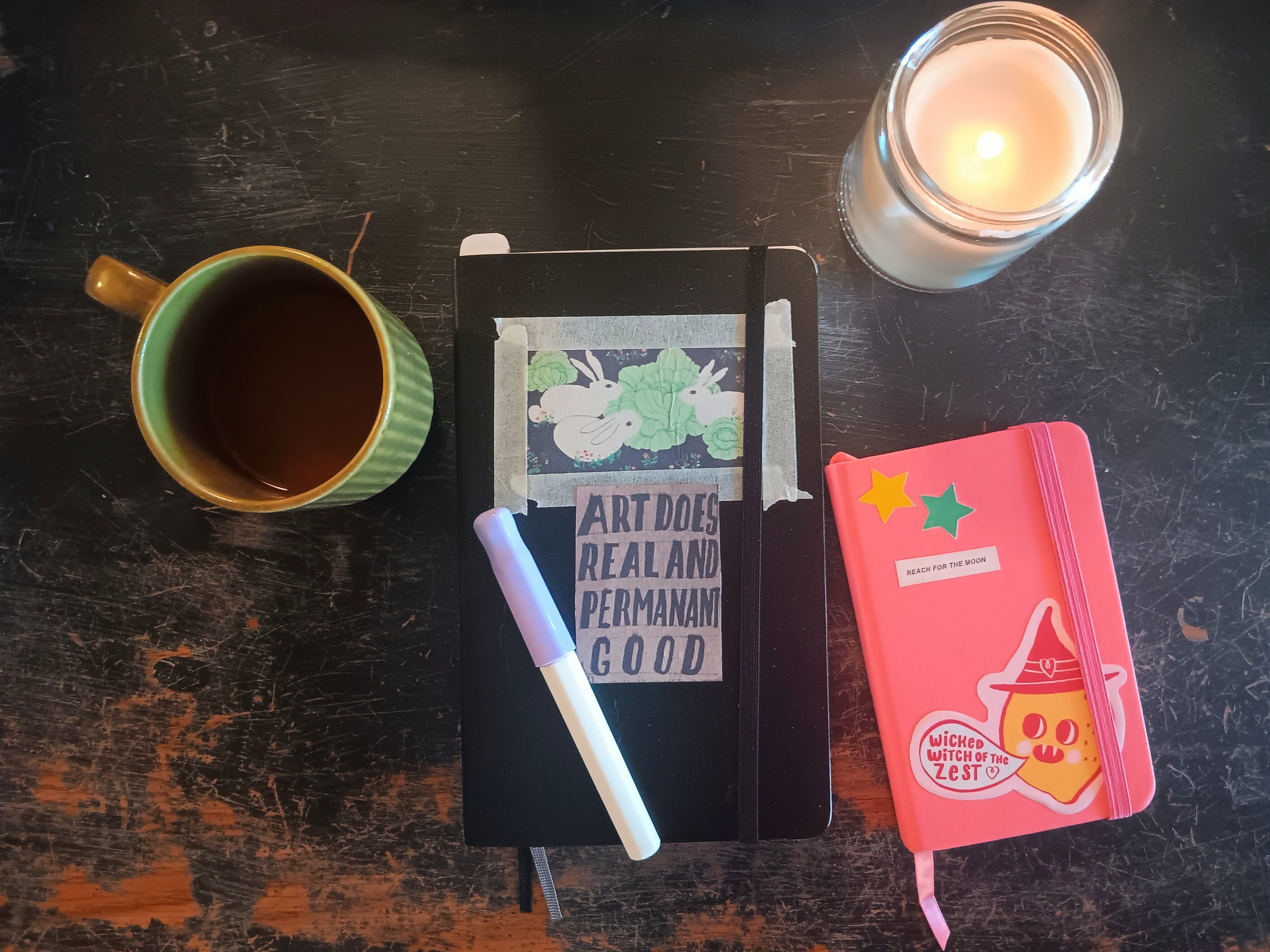
I recognize that I’m writing about writing to people who write, so I am sure you all keep notebooks too. What kind of notebooks do you keep? How do you use them? How long have you kept notebooks?
Thank you for being here. The March newsletter is coming soon as well as spring quarterly snail mail. Become a paid subscriber before March 31 to receive snail mail in April! For now, I hope you are enjoying the onset of spring as much as I am.
Cheers,
Allyson
If you love this post but don’t want to commit to a paid subscription, you can support my work by “buying me a coffee” by clicking the button above. Proceeds will go directly into the farm, always. One million thank-yous for your support, monetary or otherwise.
I have a journal and a writing notebook, plus a small notebook to carry around with me for jotting down notes. Since the beginning of the year, I’ve been collecting for and plotting a seasonal/monthly notebook but haven’t taken the leap to start it yet. We will see where that goes.
I actually really like the idea of calling everything a notebook (over journal). I've struggled with the idea of "journalling" too but I've incorporated what is actually an everything book this year. I put photos in it, ideas, sketches, more "journally" type writings, etc. It's a cheap $5 A5 sketchbook from Michaels that has 110 pages in it and I really love it.